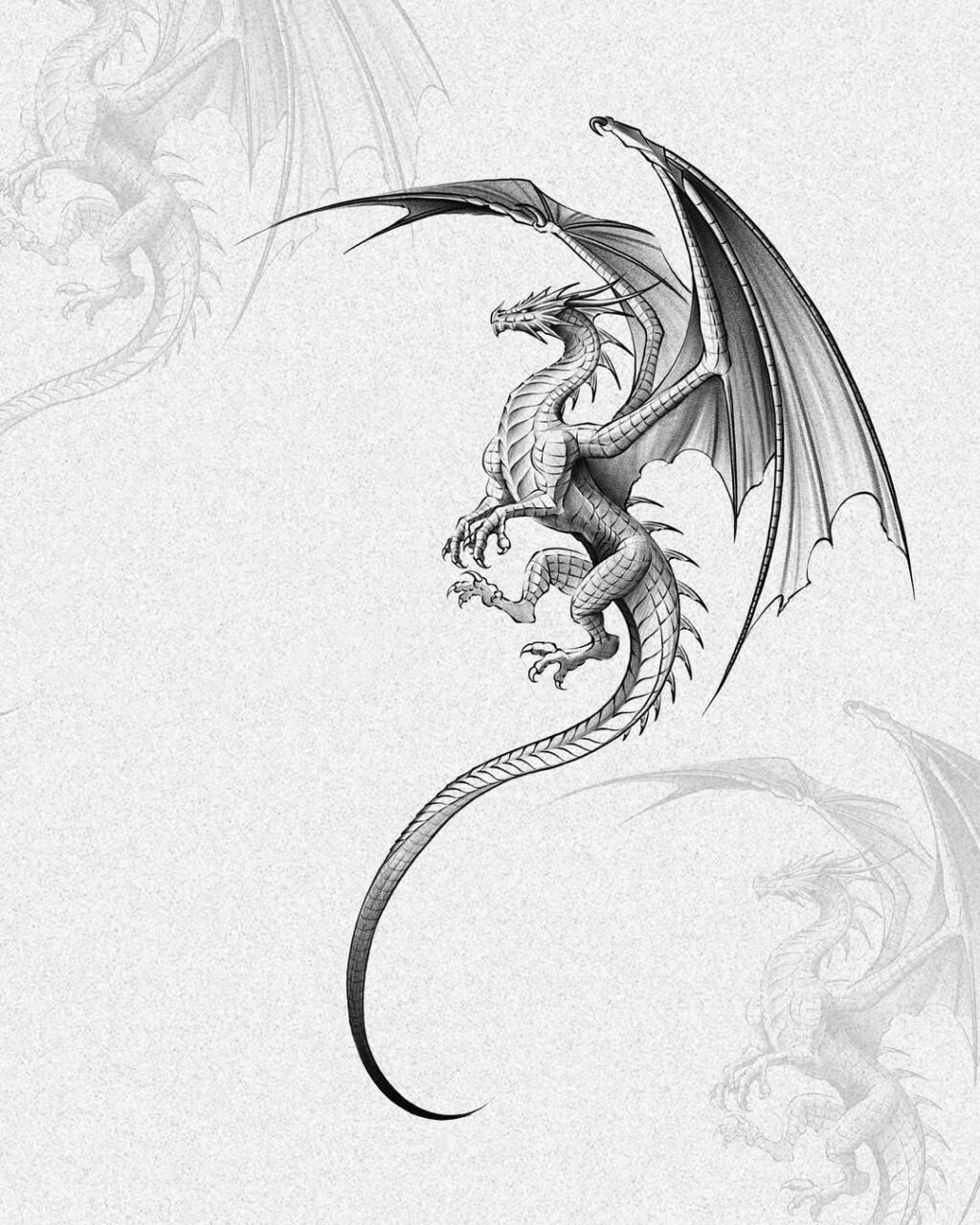
As one of the most iconic and enduring mythological creatures in the modern world, the dragon is a figure of universal recognition. Yet, beneath its familiar silhouette lies a complex and lengthy history, woven from countless cultures and epochs. The popular Western image—a massive, winged, fire-breathing reptile besieging castles—is but a single thread in a vast and varied tapestry.
From benevolent celestial spirits to embodiments of primordial chaos, the dragon’s story is a profound exploration of how humanity has personified the forces of nature, the cosmos, and the human psyche.
Divergent Paths: Eastern and Western Archetypes
The fundamental dichotomy in dragon lore lies between East and West. In Chinese culture and throughout much of Asia, the dragon (long or lung) is a benevolent, spiritual entity. It represents yang—the active, masculine principle of heaven—and is a symbol of imperial power, wisdom, rain, and cosmic harmony. Wingless and often serpentine, it is a divine force of nature, associated with fertility and prosperity.
Conversely, the European dragon, alongside similar creatures in ancient Near Eastern traditions like those of Persia, is predominantly malevolent. It is a creature of greed and destruction, often hoarding treasure, devouring humans, and representing supernatural evil, chaos, and the enemy of order. This archetype was profoundly shaped and solidified by Christian cosmology.
Ancient Roots: Chaos, Creation, and the Cosmic Serpent
The most ancient dragon traditions emerge from Sumerian, Akkadian, and Egyptian mythologies of the third millennium BCE. Here, dragon-like beings often represent chaotic forces that oppose cosmic order. In the Babylonian Enuma Elish, the goddess Tiamat, a monstrous, primordial saltwater deity, is slain by the god Marduk, who fashions the ordered world from her body. Similarly, the Egyptian serpent Apepi (Apophis) was the eternal enemy of the sun god Ra, embodying the darkness and chaos threatening the daily rebirth of the sun. In these contexts, the dragon’s defeat is a necessary act of creation.
The Greeks and Romans inherited these ideas but added nuance. While they acknowledged evil serpent-dragons like the multi-headed Hydra, they also conceived of drakontes as beneficent, sharp-eyed guardians of sacred spaces or chthonic wisdom. This ambiguity, however, was largely overridden in the West by the interpretive lens of Christianity, which consolidated ancient serpent deities into a symbol of Satan, sin, and paganism.
The Christian Dragon: Satan Embodied
Christian theology and hagiography systematically recast the dragon as a diabolical enemy. The serpent in the Garden of Eden (Genesis 3) became conflated with the “ancient serpent” of Revelation (12:9), forging a powerful link between the dragon, temptation, and the devil. This transformation gave rise to the iconic motif of the holy dragon-slayer. Saint George, the armored knight, and the Archangel Michael, the heavenly warrior, became central figures in Christian art, depicted vanquishing the satanic beast with lance or sword. Their victories symbolized the triumph of faith over evil, a resonant theme that cemented the dragon’s malevolent role in the Western imagination.
Guardians and Destroyers: Treasures and Cosmic Trees
Beyond simple antagonism, dragons are perpetually linked to the protection or coveting of sacred and valuable things. This role combines several ancient motifs: the greedy usurper, the withholder of immortality (as in the Epic of Gilgamesh), and the serpent at the foot of the cosmic tree. The result is the widespread theme of the dragon as a custodian. In Greek myth, the dragon Ladon guarded the golden apples of the Hesperides. In Germanic legend, the serpent Fáfnir lay upon a cursed hoard. Similarly, in Indic tradition, nāgas (serpentine beings) protected sacred mountains and trees.
This guardian role is deeply connected to the dragon’s symbolic association with the primordial, life-giving, and life-sustaining forces of the earth—whether it’s protecting the very source of life (the cosmic tree Yggdrasill, attacked by Níðhöggr in Norse myth) or the material wealth that springs from it. The imagery of a dragon coiled around a tree or a treasure trove became a potent heraldic symbol, found from ancient artifacts to medieval church reliefs.
A Complex Symbolism: Protectors, Emblems, and Global Kin

Despite the dominant narrative of evil, European dragon lore retains traces of a more complex, even positive, symbolism. In Slavic mythology, dragons (zmei, smok) are often ambivalent protectors of crops and fertility, though they can be sexually aggressive and dangerous. The dragon of Ljubljana, however, stands as a benevolent city guardian. Across Europe, dragons featured prominently in heraldry, appearing on shields, banners, and ship prows as symbols of power, ferocity, and protection. From the war standards of Saxon kings to the official badge of the Prince of Wales, the dragon served as a formidable emblem of lineage and national identity. Its presence in folk festivals and processions also hints at older associations with fecundity and the cyclical rhythms of nature.
This complexity finds echoes across the globe. In Mesoamerica, the Feathered Serpent Quetzalcoatl was a central deity of wind, wisdom, and life, representing a wholly benevolent “dragon” figure in the Western hemisphere.
The Celestial Dragon of the East
In contrast to the demonized Western beast, Eastern dragons retained their divine status. The Chinese dragon was intrinsically linked to water and weather, serving as a rainbringer essential for agriculture. Emperors claimed the dragon as their exclusive symbol, styling themselves as the “Sons of Heaven” whose rule mirrored the dragon’s harmonious cosmic order. Rituals involved dragon images to invoke rain or ensure cosmic renewal, as seen in New Year celebrations.
This benevolent archetype spread with Chinese influence. In Japan, the dragon (ryū/tatsu) gained shapeshifting abilities. Throughout Southeast Asia, from Cambodia to Indonesia, dragons remained potent water spirits and symbols of royal ancestry and fertility, deeply embedded in local rituals and creation myths.
Dragons Reforged: Modern Archetypes in The Lord of the Rings and Game of Thrones
In contemporary popular culture, dragons have been resurrected and reimagined, serving not just as monsters but as profound narrative symbols. J.R.R. Tolkien, a scholar of mythology, and George R.R. Martin, a writer deeply informed by historical fantasy, have created two of the most influential modern dragon paradigms.

In Tolkien’s legendarium, dragons like Smaug are the ultimate embodiment of “shadow”—malicious intelligence, greed, and destructive power. Smaug is not merely a beast; he is a hoard-guardian in the ancient tradition, his very identity fused with the stolen treasure of Erebor. His cunning speech and psychological warfare with Bilbo Baggins elevate him from a simple obstacle to a charismatic, terrifying force of corruption. He represents the moral and physical decay that follows absolute avarice. The great Eagles, while not dragonslayers in the traditional sense, function as their aerial and moral counterparts, agents of divine providence (represented by the Valar) that counteract the dragons’ terrestrial malice.
George R.R. Martin’s A Song of Ice and Fire (and its adaptation, Game of Thrones) presents a different but equally mythologically rich vision. Here, dragons are living weapons of mass destruction, the nuclear arsenal of a bygone magical age. They are deeply tied to bloodlines and power, serving as the ultimate symbol of the Targaryen dynasty’s legitimacy and terrifying might. However, Martin subverts the simple “good vs. evil” dichotomy. Daenerys Targaryen’s dragons begin as children to be nurtured but evolve into uncontrollable forces that mirror her own journey from liberator to potential conqueror. They are not inherently evil but are raw, primal power made flesh, whose moral alignment depends entirely on the one who wields them. This reflects a modern, ambiguous understanding of power and its corrupting potential.
The Unending Legacy
From the chaos serpents of ancient creation myths to the complex CGI companions and antagonists of the 21st century, the dragon’s journey is parallel to our own. It has been a symbol of what we fear—chaos, greed, untamed nature—and what we revere—wisdom, strength, cosmic order, and sovereignty. The modern revival, seen in everything from global film franchises to tabletop role-playing games where “speaking Draconic” is a skill, proves that these ancient symbols retain immense power. They continue to evolve, offering us a mirror to examine our own relationship with power, nature, and the unknown. The dragon, in all its forms, remains eternally relevant, forever perched on the boundary between our world and the realm of legend.
Sources: This article synthesizes information from scholarly sources including Encyclopedia.com, New World Encyclopedia, and Britannica.com, augmented by analysis of modern fantasy literature and media.