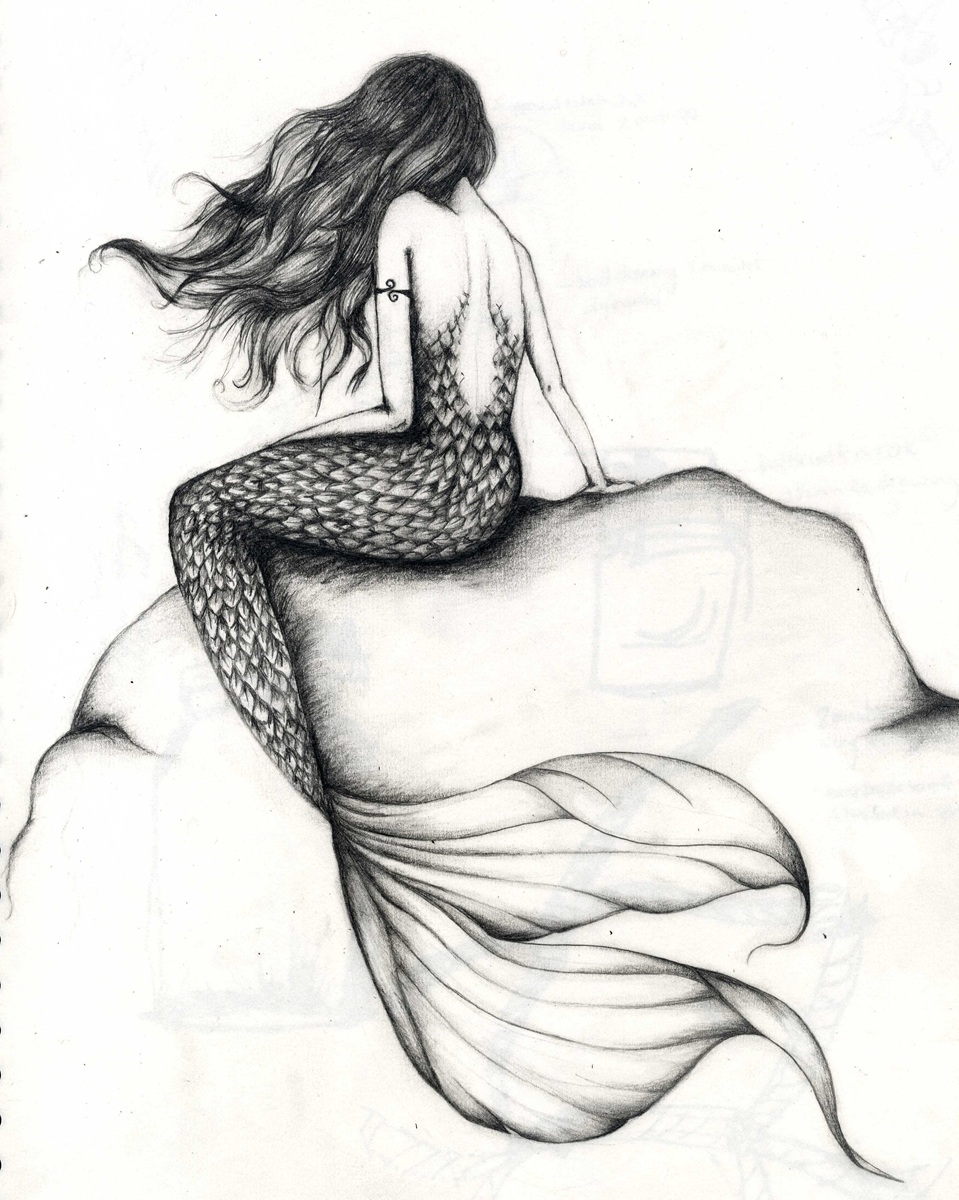
Tales of mermaids have captivated humanity since the dawn of recorded history. But how and when did the stories of these enigmatic beings first surface? Did they emerge from sailors’ vivid accounts of mysterious sightings, or do their roots dig deeper into our primal past? The journey of the mermaid myth is a winding river, flowing through ancient civilizations, adapting to cultural currents, and emerging transformed in modern fantasy.
The term “mermaid” itself derives from the Old English mere (sea) and maid (girl), a compound mirrored in the French mer and maid. This name evokes an image of beauty and oceanic grace. However, this modern perception often sanitizes a far more complex and potent legacy. Historically, mermaids were rarely portrayed as passive or vulnerable. In many traditions, they were powerful, ambivalent, and often vengeful water spirits capable of summoning storms, sowing misfortune, and dragging the unwary to a watery grave.
One of the earliest known mermaid figures comes from ancient Syria. The goddess Atargatis (also known as Derceto), worshipped in Hierapolis-Bambyce, was a deity of fertility and water who, in one seminal myth, transformed into a being half-woman, half-fish out of shame or grief. This depiction from around 1000 BCE is a foundational pillar of the mermaid archetype.
Greek mythology further enriched and diversified the concept. While the god Triton, the merman messenger of the sea, represented a divine male counterpart, the infamous Sirens of Homer’s Odyssey cemented the idea of dangerous, alluring sea women. Though originally described as part-bird in early Greek art, their evolution in popular imagination merged them with the mermaid form—enchantresses who used ethereal songs and stunning beauty to lure sailors onto rocks. Another poignant Greek folktale tells of Thessalonike, sister of Alexander the Great, transformed into a mermaid after her death in 295 BCE. Roaming the Aegean Sea, she would stop ships to ask, “Is King Alexander alive?” A correct reply (“He lives and reigns and conquers the world”) ensured safe passage; a wrong answer invoked her wrath and a fatal storm.
This fear of mermaids as harbingers of doom was widespread. Sailors across the British Isles considered them evil omens, their sightings presaging storms, shipwrecks, and death. Some tales warned that mermaids would try to board vessels, capsizing them. Yet, other cultures imbued them with benevolence. Chinese legends held that a mermaid’s tears formed the most exquisite pearls, and some believed these beings could grant immortality. Irish stories sometimes interpreted the mermaid’s song as a call of love rather than destruction.
The mermaid archetype is remarkably fluid, appearing in fresh waters as well as seas. In Slavic mythology, Rusalkas are the spirits of women who died untimely deaths by drowning, often before marriage. These restless souls, with their pale skin and long green hair, inhabited lakes and rivers, luring young men to a watery embrace. Their depiction as both tragically beautiful and perilously treacherous became a staple of Eastern European folklore and literature.
Beyond Europe, the mermaid manifest in diverse forms. In West, South, and Central Africa, the venerated water spirit Mami Wata (“Mother of the Waters”) is often portrayed as a mermaid or a snake charmer. A complex deity, she bestows beauty, wealth, and healing but can also withdraw her favor, representing the ocean’s dual nature of providence and peril. Her imagery is a syncretic blend of indigenous African beliefs, European mermaid lore, and Hindu iconography.
In Japan, the Kappa is a river-dwelling creature sometimes likened to merfolk. This child-sized being, with a simian face and a shelled back, is a mischievous and often dangerous trickster known for challenging humans to deadly games. Korean mermaids, meanwhile, are often seen as protective goddesses who warn fishermen of impending storms. Southeast Asian folklore features Suvannamaccha (“Golden Mermaid”), a figure from the Thai/Cambodian Ramayana who begins as an obstacle but ends up falling in love with the hero Hanuman.
The Americas developed their own narratives. Brazilian legend tells of Iara (or Uiara), a beautiful freshwater nymph with green hair whose hypnotic singing draws men to live with her forever beneath the rivers. Even the Age of Exploration encountered the myth. In 1493, Christopher Columbus reported seeing three “mermaids” off the coast of Hispaniola, noting disparagingly in his journal that “they were not as beautiful as they are painted, for in some ways they have a face like a man.”
Throughout the Middle Ages and Renaissance, mermaids adorned churches as symbols of sinful lust and dangerous temptation, yet they also appeared in heralds’ coats of arms and explorers’ logbooks. The debate over their reality persisted into the scientific age, with some “sightings” likely being misunderstood marine mammals like manatees or dugongs.
The mermaid’s enduring power is evidenced by its continual resurgence. In 2009, the Israeli town of Kiryat Yam offered a million-dollar reward for proof of a mermaid reportedly seen off its coast. In 2012, construction on reservoirs in Zimbabwe halted after workers claimed mermaids chased them away—a story corroborated by a government minister.
From the ancient goddess Atargatis to the animated Ariel, mermaids have reflected humanity’s fascination with, and fear of, the vast unknown of the waters. They embody the sea’s dual character: a source of life and bounty, yet a realm of profound danger and mystery. They represent the “other”—the untamable, the mysterious, and the seductive call of the deep. Whether viewed as omens, deities, monsters, or objects of longing, their story is ultimately a reflection of our own relationship with the natural world. To this day, they remain potent symbols in our collective imagination, evolving with each new generation to express contemporary themes of freedom, hybridity, and the enduring allure of the unknown.
Sources & Further Reading:
- Royal Museums Greenwich: Articles on Mami Wata and maritime mythology.
- Oceaninfo.com: Resources on ocean legends and mythical creatures.
- Encyclopaedia Britannica: Entries on Sirens, Triton, Rusalka, Kappa, and global folklore.
- Realmermaids.net: A compendium of mermaid myths from various cultures.
- Wikipedia.org: Entries for “Mermaid,” “Atargatis,” “Siren (mythology),” “Rusalka,” “Mami Wata,” “Suvannamaccha,” and related topics.
- Livescience.com: Articles on the history and science behind mermaid legends.
- National Museum of African Art (Smithsonian): Exhibits and resources on Mami Wata.
- Mermaidsofearth.com: A site dedicated to cataloging mermaid tales worldwide.
- The Penguin Book of Mermaids edited by Cristina Bacchilega and Marie Alohalani Brown (Anthology of global mermaid tales).
- Mermaids: The Myths, Legends, and Lore by Skye Alexander.
- Sirens and Sea Monsters: The Perilous Seas in World Mythology by Christopher Dell.